
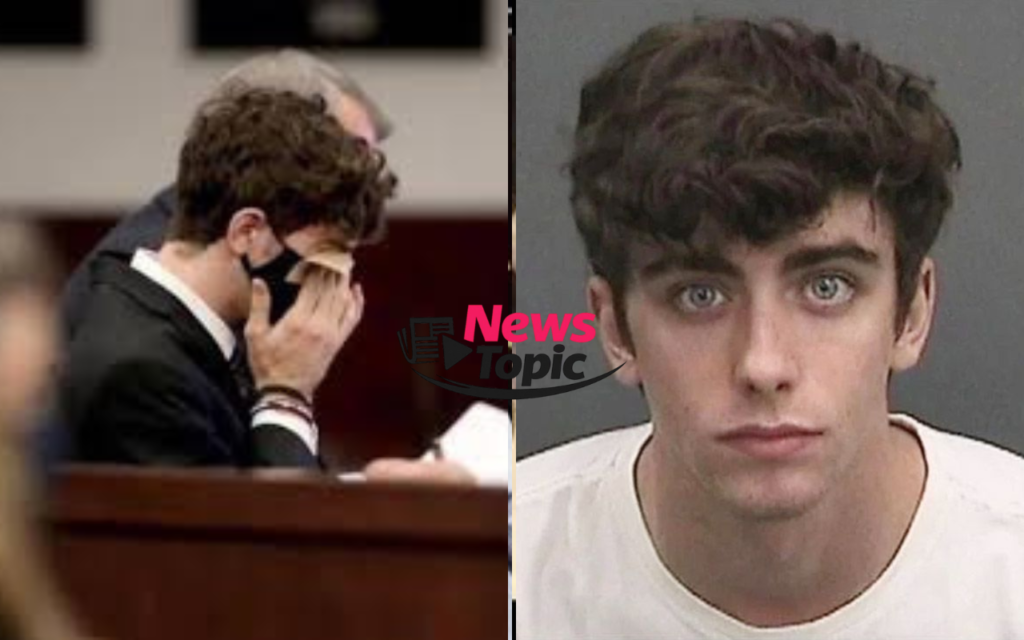

On May 23, 2018, a joyride on a popular Tampa roadway turned into one of the most devastating street‑racing tragedies in recent U.S. history. Cameron Coyle Herrin, then 18 years old, was driving a 2018 Ford Mustang, freshly gifted to him as a high‑school graduation present, when he and another teenager engaged in illegal street racing on Bayshore Boulevard, a scenic road famous for its long sidewalk and views of Tampa Bay.
Bayshore Boulevard is not a highway or closed course but a public roadway with a speed limit near 45 mph — a detail crucial to understanding how lethal the racing proved to be. In the moments before the crash, data retrieved from Herrin’s Mustang showed it was traveling at approximately 102 mph, more than twice the posted speed limit.
The Fatal Collision — Lives Lost and Innocent Victims
While racing another vehicle northbound — driven by 17‑year‑old John Barrineau — Herrin’s Mustang approached a crosswalk where 24‑year‑old Jessica Reisinger‑Raubenolt and her 21‑month‑old daughter, Lillia, were attempting to cross the street. Both victims were legally crossing toward a marked pedestrian ramp between intersections. Despite braking hard just seconds before impact, the Mustang struck them both at lethal speed.
Jessica died at the scene of the crash. Her daughter Lillia was rushed to a hospital but succumbed to her injuries a short time later. The father and husband, David Raubenolt, was left to mourn the loss of his wife and only child.
Police also arrested Herrin’s older brother Tristan Herrin, 20, who was a passenger in the car at the time of the crash and later faced street‑racing charges.
Legal Charges and Prosecutors’ Investigations
Immediately after the crash, Herrin and Barrineau were both charged with two counts of vehicular homicide, unlawful racing, and reckless driving related to the deaths and injuries caused by the collision. Herrin initially faced detention without bond after an additional count was added following Lillia’s death.
Tampa police and prosecutors emphasized that the excessive speed and irresponsible behavior directly caused the fatal outcome. Witnesses at the scene described seeing vehicles racing and hearing screeching tires shortly before the collision.
Sentencing and Court Proceedings
In April 2021, after nearly three years of legal proceedings and delays, Hillsborough Circuit Court Judge Christopher Nash sentenced Cameron Herrin, then 21 years old, to 24 years in Florida state prison. Herrin had pleaded guilty to the felony charges, leaving sentencing to the judge’s discretion.
Prosecutors sought a maximum term — up to 30 years — but Judge Nash determined that 24 years was an appropriate punishment for the lives lost and the recklessness evident in the case. During sentencing, emotional victim impact statements were read, underscoring the profound loss suffered by the Raubenolt family.
Herrin’s family members wept in court as he was handcuffed and led away, while Herrin’s own attorney offered a brief apology on his behalf. The driver he had been racing, Barrineau, received a six‑year sentence and probation under a plea deal, as he did not directly cause the deaths.
Appeals and Judicial Review
Herrin’s legal team filed an appeal challenging the length of the sentence, but in May 2022, the 2nd District Court of Appeals upheld the original 24‑year prison term. The appellate court affirmed that the sentencing decision remained within the bounds of Florida law and properly reflected the severity of the crime.
The Human Cost — Victims’ Families and Public Response
The crash did more than take lives — it left a community in mourning and a family irrevocably changed. Victim impact statements delivered at sentencing described an “impossible” grief and a void left in the lives of those who loved Jessica and Lillia. Community members and advocates called for stricter enforcement of street‑racing laws and greater public awareness about the dangers of illegal racing in residential areas with pedestrians.
The road where the tragedy occurred later saw increased attention from city authorities regarding signage, patrols, and efforts to remind drivers that Bayshore Boulevard, despite its pleasant views, remains a shared space with pedestrians and cyclists.
The Social Media Phenomenon — Unexpected Global Attention
Despite the gravity of the crash and the clear legal responsibility established in court, Cameron Herrin became the subject of a remarkable and controversial social media following beginning in 2021. Videos, memes, and posts about Herrin went viral, especially on platforms like TikTok, where clips related to his name reportedly accumulated over 1.7 billion views. Some users expressed support for him, challenged the severity of his sentence, or suggested he was “too cute” to deserve prison.
This online phenomenon drew wide criticism. Victims’ advocates and even Herrin’s own family expressed concern over the “unhealthy obsession” some social media users developed — seemingly focusing on Herrin’s appearance rather than the tragic loss of two innocent lives.
A Change.org petition also circulated, seeking a new trial or appeal, gathering thousands of signatures from people around the world who expressed sympathy for Herrin. Critics of this online support argued that social media can distort reality, elevating narratives that overlook accountability and the real suffering of victims’ families.
Broader Implications — Street Racing, Safety, and Justice
The Cameron Herrin case underscores the real dangers of illegal street racing — especially on public roads shared with pedestrians and families. Experts and lawmakers have pointed to the case as an example of why stronger enforcement and public education about road safety are needed. Despite some online voices minimizing the severity of racing, the physical evidence — including vehicle data showing speeds over 100 mph — made it clear that reckless driving can have catastrophic consequences.
At a broader cultural level, the case also sparked debate about how justice is perceived online versus in courts of law. The clash between a community’s grief and a stranger’s sympathy on the internet reflects deeper tensions in how the public engages with true‑crime stories and legal outcomes.
Conclusion — The Legacy of a Deadly Choice
The story of Cameron Herrin is more than a legal case: it is a cautionary tale about the choices young drivers can make and the devastating impact those choices can have on real lives. It is also a reflection on how modern digital culture can sometimes blur compassion with sensationalism, drawing unintended attention to individuals involved in tragic events.
The victims — Jessica and Lillia Reisinger‑Raubenolt — were taken far too soon on what should have been an ordinary day. Their deaths stand as a sobering reminder that public roads are not arenas for high‑speed competition, and that every driver has a responsibility to protect their fellow community members.
you may also read :Meeting Dr. Dre: A Turning Point