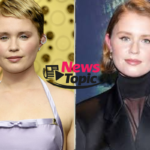


Clara McGregor, widely known as Clara Mathilde McGregor, is a British-American actress, model, and film producer who has steadily carved her own identity in the entertainment industry while being the daughter of internationally acclaimed actor Ewan McGregor. Born into a family deeply rooted in cinema and creative arts, Clara’s life has been shaped by a combination of privilege, artistic exposure, personal struggle, and a strong desire for independence.
Table of Contents
ToggleAlthough she is often introduced through her family name, Clara McGregor has spent years building a professional identity that extends beyond her lineage. Her journey includes modeling campaigns, independent film acting, production ventures, and public conversations about mental health and recovery. Her life story is not simply one of celebrity inheritance but also of self-definition, emotional resilience, and creative exploration.
This article provides a deeply detailed narrative of Clara McGregor’s life, including her early upbringing, education, career development, film roles, production work, personal relationships, public image, challenges, and long-term influence in modern cinema and culture.
Early Life and Family Background
Clara McGregor was born on February 4, 1996, in England, into a family already deeply embedded in the international film industry. Her father, Ewan McGregor, had already begun building a global reputation through major performances in films such as Trainspotting, Moulin Rouge!, and later Star Wars, while her mother, Eve Mavrakis, worked as a production designer. This combination of acting and behind-the-scenes filmmaking created an environment where creativity and storytelling were part of daily life.
Growing up, Clara experienced a multicultural upbringing. Her childhood was not confined to one place, as her family moved between the United Kingdom, France, and the United States. This exposure to multiple cultures helped shape her worldview, language adaptability, and artistic sensibilities. She was raised in a household where film sets, creative discussions, and artistic collaboration were normal rather than extraordinary.
As the eldest of four sisters, Clara also developed a sense of responsibility early in life. Her siblings include Esther McGregor and two adopted sisters, Jamyan and Anouk. The McGregor household was described as close-knit, although later years brought public attention due to her parents’ separation. Despite these changes, Clara’s upbringing remained strongly influenced by creativity, travel, and emotional complexity.
From an early age, Clara was exposed to both the privileges and pressures of fame. While she had access to artistic opportunities and influential networks, she also experienced the challenges of being associated with a high-profile family. This duality later became a recurring theme in her personal and professional identity.
Education and Creative Development
Clara McGregor’s academic journey led her to New York University, specifically the Tisch School of the Arts, one of the most prestigious creative institutions in the United States. Initially, she enrolled in photography, showing an early interest in visual storytelling from behind the camera rather than in front of it. This choice reflected her desire to understand narrative construction, composition, and artistic framing before stepping into performance.
During her time at university, Clara’s creative direction evolved significantly. Exposure to acting classes, film production workshops, and collaborative projects shifted her focus from still photography toward performance and filmmaking. This transition marked a critical turning point in her artistic identity.
Eventually, she expanded her studies to include acting and film production. Her academic environment allowed her to explore multiple aspects of storytelling, including directing, screen analysis, and character development. She graduated around the mid-2010s, leaving university with both technical knowledge and a growing interest in independent cinema.
Her education not only provided formal training but also helped her separate her own ambitions from her family legacy. It was during this period that she began forming her perspective on identity, creativity, and emotional expression in film.
Entry Into Modeling and Early Public Exposure
Before establishing herself as an actress, Clara McGregor entered the modeling industry. Her natural presence, fashion sensibility, and artistic background made her a strong candidate for editorial and commercial modeling work. She signed with Wilhelmina Models, a well-known agency that represents international talent.
Her modeling career included collaborations with fashion brands and editorial publications. She appeared in campaigns that emphasized modern femininity, individuality, and artistic expression. Rather than focusing purely on commercial modeling, Clara often gravitated toward creative fashion projects that allowed her to explore mood, character, and visual storytelling.
Modeling became an important foundation for her later work in film. It helped her become comfortable in front of the camera, understand visual direction, and develop a sense of personal style. At the same time, she maintained an interest in deeper artistic work, which eventually led her toward acting and production.
Transition Into Acting and Independent Cinema
Clara McGregor’s transition into acting was gradual but intentional. Unlike many celebrity children who enter mainstream film quickly, she chose a more independent and artistic path. Her early roles were often in smaller productions that focused on character-driven narratives rather than commercial success.
Her early film appearances included supporting roles in projects such as Christopher Robin, where she appeared in a minor capacity. While not a major acting debut, this role marked her entry into professional film production environments.
Over time, she began appearing in independent films that allowed her more creative freedom. Projects such as Reefa and The Birthday Cake gave her opportunities to work alongside experienced actors and filmmakers while developing her own performance style. These films often dealt with emotional themes, identity struggles, and interpersonal relationships, aligning with her interest in complex storytelling.
Her acting style is often described as naturalistic and emotionally grounded. Rather than relying on theatrical performance, she tends to emphasize subtle emotional expression, internal conflict, and character realism. This approach reflects both her training and her preference for intimate storytelling.
Collaboration With Ewan McGregor and Family Dynamics in Film
One of the most publicly discussed aspects of Clara McGregor’s career has been her collaboration with her father, Ewan McGregor. Their joint appearances in films such as The Birthday Cake and Bleeding Love drew significant media attention due to their real-life relationship.
Working with a parent in a professional environment can be both emotionally complex and creatively enriching. In interviews and discussions surrounding these projects, Clara has emphasized the importance of separating personal dynamics from professional roles. However, the emotional depth of their real-life connection often adds authenticity to their on-screen interactions.
These collaborations also highlighted themes of reconciliation, family tension, and emotional healing, which mirrored aspects of Clara’s personal experiences. Rather than avoiding her family identity, she has at times used it as a creative resource in storytelling.
Expansion Into Television and Broader Screen Presence
In addition to film work, Clara McGregor expanded into television, including appearances in anthology series such as American Horror Story: NYC. This role introduced her to a wider audience and demonstrated her ability to work within established television formats.
Television provided her with a different kind of acting environment compared to independent films. It required faster production schedules, adaptation to ensemble casts, and flexibility in performance style. Her participation in such projects marked a step toward greater visibility in mainstream entertainment.
Despite this, she has continued to prioritize independent cinema over large commercial productions. Her career choices reflect a preference for artistic integrity rather than mass-market visibility.
Production Work and Entrepreneurial Vision
Beyond acting and modeling, Clara McGregor has developed a strong presence behind the camera as a producer. She co-founded a production company called Deux Dames Entertainment with filmmaker Vera Bulder. This venture represents her commitment to shaping narratives rather than only performing them.
The company focuses on female-driven storytelling, independent film development, and artistic adaptation of literary and conceptual works. Through this production company, Clara has taken on roles that include creative development, script evaluation, and project oversight.
Her involvement in production reflects a broader trend among younger actors who seek control over storytelling and creative direction. Instead of relying solely on external opportunities, she is actively building a platform for curated artistic expression.
Personal Life and Relationships
Clara McGregor has maintained a relatively private but publicly acknowledged personal life. She has been in a long-term relationship with filmmaker and music producer Jimmy Giannopoulos since around 2017. Their relationship is characterized by shared creative interests and involvement in artistic industries.
Unlike many celebrity relationships that are heavily publicized, Clara and her partner have chosen to maintain a low-profile approach, occasionally appearing together at industry events but largely avoiding constant media exposure.
Her personal life has often been discussed in the context of her emotional openness and willingness to share experiences related to mental health and personal growth.
Mental Health Journey and Public Advocacy
One of the most significant aspects of Clara McGregor’s public identity is her openness about mental health struggles. She has spoken about experiences with anxiety, depression, and addiction recovery, offering insight into the challenges she has faced behind her public image.
Her willingness to discuss these topics has contributed to broader conversations about mental health in the entertainment industry. She has emphasized the importance of therapy, rehabilitation, and emotional honesty as essential tools for recovery and stability.
Rather than presenting a polished celebrity image, Clara has often highlighted vulnerability as part of her identity. This approach has resonated with audiences who value authenticity over perfection in public figures.
Public Image, Media Attention, and Cultural Perception
As the daughter of a globally recognized actor, Clara McGregor has frequently been the subject of media attention. Coverage has ranged from her modeling work to her acting roles and family relationships.
She has also been associated with discussions about “nepotism in Hollywood,” a topic that critiques the advantages enjoyed by children of celebrities. Clara has acknowledged her privileged background while also emphasizing her efforts to build an independent career through training, artistic choices, and production work.
Her public image is therefore shaped by a combination of privilege, effort, emotional openness, and creative ambition. Rather than fitting into a single category, she occupies a complex space within modern celebrity culture.
Artistic Identity and Creative Philosophy
Clara McGregor’s artistic identity is deeply connected to emotional storytelling, human relationships, and psychological realism. She tends to gravitate toward projects that explore identity, trauma, intimacy, and personal transformation.
Her fashion sensibility also intersects with her artistic expression. She often approaches style as a form of storytelling, using clothing and visual presentation to reflect mood and identity.
This integration of fashion, film, and emotional narrative defines her creative philosophy. She is not solely an actress or model but a multidisciplinary artist exploring multiple forms of expression.
Future Career Direction and Long-Term Potential
Clara McGregor’s career trajectory suggests continued expansion into both acting and production. With experience in independent film, television, modeling, and entrepreneurship, she is positioned to take on increasingly complex creative roles.
Her production company is likely to play a central role in her future work, potentially allowing her to develop films as a producer or even move into directing and writing. Her interest in emotionally driven narratives suggests she will continue to prioritize meaningful storytelling over commercial entertainment.
As she progresses in her career, she is expected to further establish herself as a creative force in independent cinema and possibly broader international film markets.
Conclusion
Clara Mathilde McGregor represents a modern generation of artists who navigate fame, family legacy, and personal identity while building independent careers in creative industries. Her journey from a culturally rich upbringing to modeling, acting, and film production reflects both opportunity and intentional self-definition.
While her surname connects her to one of Hollywood’s most respected actors, her work demonstrates a clear effort to establish individuality. Through emotional openness, artistic exploration, and entrepreneurial initiative, Clara McGregor continues to shape a career defined not by inheritance alone but by creative ambition and personal authenticity.