
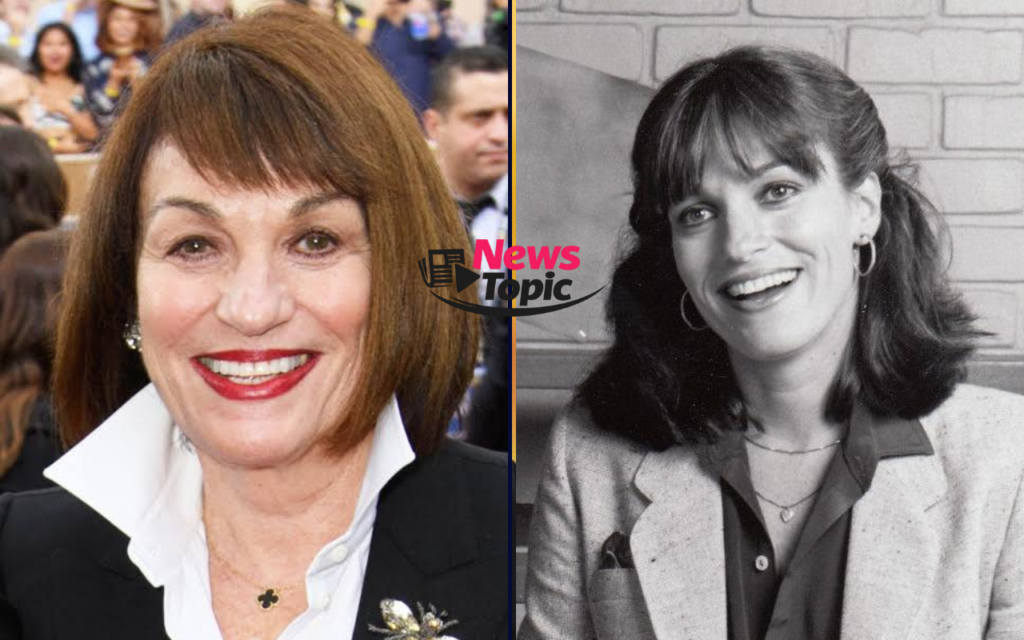

Gwynne Gilford is an American former actress and licensed psychotherapist whose life story spans multiple successful careers and several generations of Hollywood history. Although many people recognize her today as the mother of acclaimed actor Chris Pine, Gwynne Gilford established her own reputation in television and film long before her son’s rise to international fame.
Her journey is unique because it combines success in entertainment with an equally meaningful second career in mental health. Unlike many actors who spend their entire lives pursuing roles in Hollywood, Gilford chose to reinvent herself and dedicate her later years to helping others through psychotherapy. Her story reflects talent, intelligence, adaptability, and personal growth.
Over the decades, Gwynne Gilford has become an interesting figure not only because of her acting achievements but also because of her family’s deep roots in the entertainment industry. From her famous mother Anne Gwynne to her husband Robert Pine and son Chris Pine, the Gilford-Pine family represents one of Hollywood’s enduring multigenerational success stories.
Early Life and Family Background
Gwynne Gilford was born Gloria Gwynne Gilford on July 27, 1946, in Los Angeles, California. Being born in the heart of the American entertainment industry exposed her to Hollywood culture from an early age.
Her mother, Anne Gwynne, was a successful actress who gained popularity during the 1940s. Anne became particularly famous for appearing in Universal Pictures horror films and was considered one of Hollywood’s earliest scream queens. Her work in films such as House of Frankenstein and Black Friday helped establish her as a recognizable face in classic cinema.
Gwynne’s father, Max M. Gilford, was a respected attorney who specialized in entertainment law. He later became president of the Hollywood Bar Association, giving the family significant connections within both the legal and entertainment communities.
Growing up in such an environment naturally exposed Gwynne to actors, filmmakers, producers, and other influential figures. However, despite her mother’s successful acting career, Anne reportedly encouraged her daughter to focus on education and personal development rather than rushing into show business.
This balanced upbringing helped shape Gwynne’s perspective on life and career choices. She learned the realities of Hollywood while also understanding the importance of education, discipline, and professional versatility.
Education and Personal Development
Unlike many young performers who immediately pursue acting opportunities, Gwynne Gilford invested heavily in her education. She attended the University of California, Los Angeles (UCLA), where she expanded her academic knowledge while developing her artistic interests.
Her educational experiences provided a strong foundation that later helped her navigate both the entertainment industry and the field of psychotherapy. During her formative years, she developed an interest in human behavior, communication, and emotional intelligence—qualities that would eventually play an important role in her second career.
Her studies also contributed to her confidence as a performer. Rather than relying solely on natural talent, she approached acting with preparation and professionalism. This combination of intelligence and creativity distinguished her from many aspiring performers entering Hollywood during the late 1960s.
Entering the Entertainment Industry
By the late 1960s, Gwynne Gilford had decided to pursue acting professionally. The television industry was expanding rapidly during this period, creating numerous opportunities for talented performers.
Like many actors of her generation, she began with guest appearances and supporting roles. These early experiences allowed her to develop her skills while building valuable relationships within the industry.
Television was undergoing significant changes during this era. Networks were experimenting with new storytelling approaches, and audiences were increasingly interested in shows that reflected contemporary social issues. This environment created opportunities for actresses like Gilford who could bring authenticity and intelligence to their performances.
Her natural screen presence, professionalism, and versatility helped her secure a steady stream of acting work. Although she never pursued celebrity status aggressively, she became a respected and reliable performer within the television industry.
Television Career and Rising Recognition
Throughout the 1970s, Gwynne Gilford established herself as a recognizable television actress. Her ability to portray a variety of characters allowed her to work across multiple genres, including drama, comedy, family entertainment, and suspense.
One of her notable appearances came in The Young Lawyers, a television drama that explored legal and social issues through the experiences of young attorneys. The series reflected the changing cultural landscape of America during the early 1970s and provided Gilford with an opportunity to showcase her dramatic abilities.
She also appeared in numerous television programs that were popular during the decade. These performances helped her become familiar to audiences across the country.
Unlike many performers who become associated with a single role, Gilford demonstrated remarkable flexibility. She could convincingly portray caring mothers, professional women, romantic interests, and complex dramatic characters.
This versatility became one of her greatest strengths and contributed significantly to her long-term success.
A New Kind of Family and Career Milestone
One of the most significant roles of Gwynne Gilford’s career came when she starred in the television series A New Kind of Family.
The show focused on a blended family navigating modern relationships and changing social norms. Gilford portrayed Abby Stone, a divorced mother whose experiences reflected issues facing many American families during the late 1970s.
At the time, television rarely explored nontraditional family structures in depth. The series represented a progressive approach to storytelling, addressing themes such as divorce, remarriage, parenting, and adaptation.
Gilford’s performance was praised for its warmth and realism. She brought emotional depth to the character, making Abby Stone relatable and believable.
Although the series had a relatively short run, it remains one of the most memorable projects associated with her acting career.
Film Career and Movie Appearances
In addition to her television work, Gwynne Gilford appeared in several films during the 1970s and 1980s.
One of her earliest movie appearances was Beware! The Blob, a sequel connected to the famous science-fiction horror franchise. The film introduced her to audiences beyond television and expanded her professional portfolio.
She later appeared in Satan’s School for Girls, a supernatural thriller that became a notable television horror production of its era.
Her film career continued with projects such as Ruby and Oswald, Fade to Black, Kate’s Secret, and Masters of the Universe.
Each role demonstrated her ability to adapt to different genres. Whether appearing in suspense films, dramas, fantasy productions, or science-fiction projects, Gilford consistently delivered professional performances.
Although she was never positioned as a major Hollywood movie star, her filmography reflects a productive and diverse acting career.
Marriage to Robert Pine
One of the most important aspects of Gwynne Gilford’s life is her long-lasting marriage to actor Robert Pine.
The couple married on September 6, 1969, beginning a partnership that would endure for decades. In an industry known for short-lived relationships, their marriage became an example of stability and commitment.
Robert Pine later achieved widespread recognition for portraying Sergeant Joseph Getraer on the hit television series CHiPs. His success further strengthened the family’s connection to Hollywood.
Interestingly, Gwynne occasionally appeared on CHiPs, portraying Betty Getraer, the wife of Robert Pine’s character. These appearances allowed the real-life couple to share the screen and added an extra layer of authenticity to the series.
Their enduring relationship has often been admired by fans and industry observers alike.
Building a Hollywood Family
Gwynne and Robert Pine created a family that would eventually become one of Hollywood’s most recognizable entertainment dynasties.
Their daughter, Katherine Pine, pursued acting before exploring other professional interests. Like her mother, she demonstrated a willingness to move beyond traditional Hollywood expectations.
Their son, Chris Pine, would ultimately become one of the most successful actors of his generation.
The family’s collective achievements span multiple decades and include accomplishments in film, television, and psychology.
Unlike many celebrity families, the Pines have generally maintained a reputation for professionalism, privacy, and stability.
Gwynne Gilford as Chris Pine’s Mother
Today, many people first learn about Gwynne Gilford through her connection to Chris Pine.
Born in 1980, Chris grew up in a household where both parents were working actors. This environment provided him with unique insights into the realities of the entertainment industry.
Unlike some celebrity children who enter Hollywood without understanding its challenges, Chris benefited from the guidance of parents who had firsthand experience.
Gwynne’s influence extended beyond acting advice. Her later work as a psychotherapist likely contributed to a family culture that emphasized emotional intelligence, self-awareness, and personal growth.
Chris Pine has frequently been described as thoughtful, articulate, and grounded despite his fame. Many observers believe these qualities reflect the values instilled by his parents.
As Chris achieved international success through films such as Star Trek, Wonder Woman, Into the Woods, and Hell or High Water, public interest in his family naturally increased.
This renewed attention introduced a new generation of fans to Gwynne Gilford’s own accomplishments.
Transition Away from Acting
One of the most fascinating aspects of Gwynne Gilford’s story is her decision to leave acting.
Many performers spend their entire lives pursuing opportunities in entertainment. Gilford, however, chose a different path.
By the late 1980s, she gradually stepped away from Hollywood and began preparing for an entirely new career.
This decision was not motivated by a lack of opportunities. Instead, it reflected a desire for personal growth and a deeper interest in helping others.
Leaving a successful profession requires courage, especially when that profession is deeply connected to one’s identity.
Gilford’s willingness to embrace change demonstrates her confidence and independence.
Becoming a Licensed Psychotherapist
After retiring from acting, Gwynne Gilford pursued education and training in psychotherapy.
This transition may seem surprising at first, but there are meaningful connections between acting and counseling. Both professions require empathy, communication skills, emotional awareness, and a deep understanding of human behavior.
As a psychotherapist, Gilford dedicated herself to supporting individuals facing emotional and psychological challenges.
Her work represented a dramatic shift from public performance to private service. Instead of entertaining audiences, she focused on helping people improve their mental well-being and quality of life.
This second career earned her respect in an entirely different professional field.
Her ability to succeed in two distinct careers highlights her intelligence, adaptability, and commitment to lifelong learning.
Life Outside the Spotlight
Unlike many former actors who continue seeking public attention, Gwynne Gilford has largely maintained a private lifestyle.
She rarely appears in the media and generally avoids the celebrity culture surrounding modern Hollywood.
This privacy has allowed her to focus on family, professional work, and personal interests.
Despite her low public profile, interest in her life remains strong because of her unique story and her family’s prominence within the entertainment industry.
Her decision to prioritize personal fulfillment over fame has become one of the defining characteristics of her legacy.
Gwynne Gilford’s Legacy
Gwynne Gilford’s legacy extends far beyond her television and film credits.
She represents a rare example of someone who achieved success in multiple fields while maintaining strong personal values.
As an actress, she contributed to television and film during an important era in entertainment history. Her performances helped shape stories that reflected changing social realities and evolving audience expectations.
As a wife and mother, she helped create a family whose influence on Hollywood spans multiple generations.
As a psychotherapist, she dedicated herself to improving the lives of others through compassion, expertise, and emotional support.
Perhaps most importantly, her life demonstrates that reinvention is possible at any stage. She refused to be defined by a single career and instead embraced new opportunities for growth.
Conclusion
Gwynne Gilford’s story is one of talent, resilience, and transformation. Born into a Hollywood family, she built a successful acting career, contributed to numerous television and film projects, and became part of one of the entertainment industry’s most enduring families through her marriage to Robert Pine.
Her role as the mother of Chris Pine has introduced her to new audiences, but her accomplishments stand firmly on their own. From her memorable acting performances to her respected work as a psychotherapist, she has demonstrated a remarkable ability to evolve and succeed.
Today, Gwynne Gilford remains an inspiring example of how a person can pursue multiple passions, embrace change, and create a lasting legacy that extends far beyond fame. Her life serves as a reminder that true success is not limited to one profession or one chapter of life but can be built through continuous growth, learning, and meaningful contributions to others.
you msy also read :Early Career as an Attorney