
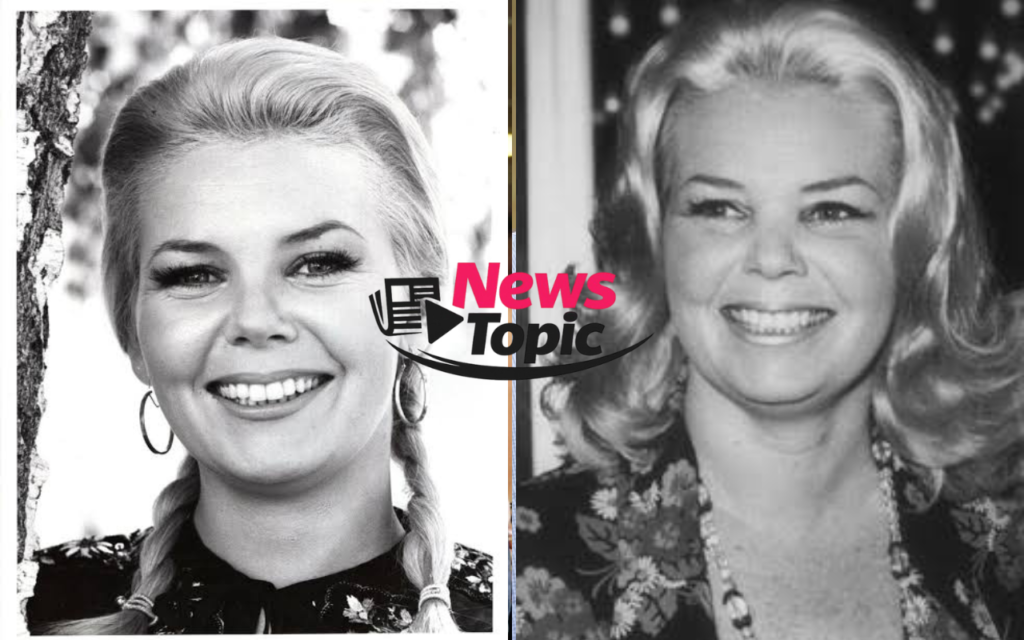

Sigrid Valdis remains one of the most recognizable actresses associated with classic American television, particularly for her memorable role as Hilda on the beloved sitcom Hogan’s Heroes. While many television stars of the 1960s and 1970s continued long careers in Hollywood, Valdis chose a different path. Her career was relatively brief, yet her impact on television audiences endured for decades. Beyond her acting work, she became widely known because of her marriage to Bob Crane, the star of Hogan’s Heroes, and her connection to one of Hollywood’s most infamous unsolved murder cases.
Although many people remember her simply as Colonel Klink’s secretary, there is much more to Sigrid Valdis’s story. She was a talented actress, model, wife, mother, and resilient woman who navigated fame, personal tragedy, and public scrutiny with remarkable dignity. Her life represents an intriguing chapter in television history, blending professional success with personal challenges that continue to fascinate fans of classic entertainment.
This comprehensive biography explores her early life, rise to fame, acting career, relationship with Bob Crane, family life, retirement from Hollywood, and enduring legacy.
Early Life and Family Background
Sigrid Valdis was born Patricia Annette Olson on September 21, 1935, in Bakersfield, California. Her birth name reflected her Scandinavian ancestry, which would later influence the stage name she adopted during her acting career. Growing up in California during the Great Depression and World War II years, she experienced a rapidly changing America that would eventually become the center of the entertainment industry.
As a child and teenager, Patricia displayed an interest in fashion, beauty, and performance. Her striking appearance and natural confidence attracted attention early in life. Friends and family often remarked on her elegance and poise, qualities that would later help her establish herself in Hollywood.
Unlike many future actresses who moved to California to pursue careers in entertainment, Valdis already lived near the industry’s center. This geographic advantage allowed her to observe the glamour and excitement of Hollywood from a young age. However, success was not guaranteed. Like thousands of aspiring performers, she needed determination, training, and patience to build a professional career.
Before becoming an actress, she worked as a model. Her Scandinavian features, blonde hair, and photogenic appearance made her particularly appealing to advertisers and department stores. Modeling helped her develop the confidence and camera presence that later proved invaluable in television and film.
Recognizing her desire to become a serious performer, she pursued professional acting training. She studied under respected acting instructors and worked diligently to develop her craft. This dedication distinguished her from many performers who relied solely on physical appearance.
The Origins of the Name Sigrid Valdis
Many fans are unaware that Sigrid Valdis was not her birth name. Patricia Annette Olson adopted the professional name “Sigrid Valdis” as she entered the entertainment industry.
The name reflected her Scandinavian heritage and provided a distinctive identity within Hollywood. During the mid-twentieth century, many actors and actresses changed their names to create memorable professional brands. In Valdis’s case, the name projected sophistication, elegance, and uniqueness.
The choice proved effective. The name Sigrid Valdis stood out in casting offices and promotional materials. It also helped establish an image that complemented her glamorous appearance and refined demeanor.
Today, most fans know her exclusively as Sigrid Valdis, while Patricia Annette Olson remains primarily a biographical detail known to historians and dedicated admirers.
Entering the Entertainment Industry
Breaking into Hollywood was rarely easy, even for talented performers. During the late 1950s and early 1960s, television production expanded rapidly, creating opportunities for aspiring actors and actresses.
Valdis began securing small roles in television programs and films. Like many performers of her generation, she accepted a variety of assignments, building experience while waiting for a breakthrough opportunity.
Her early appearances demonstrated versatility and professionalism. Casting directors appreciated her ability to adapt to different genres, including drama, comedy, suspense, and adventure.
These years were crucial in shaping her career. While she was not yet a household name, she gained valuable experience working alongside established performers and learning the demands of professional television production.
The entertainment industry during this era was highly competitive. Hundreds of aspiring actresses competed for a limited number of roles. Success often depended on persistence as much as talent. Valdis demonstrated both qualities as she steadily expanded her résumé.
Early Television Roles
Before becoming famous on Hogan’s Heroes, Sigrid Valdis appeared in numerous television productions.
Television was experiencing a golden age during the 1960s. Networks produced countless dramas, comedies, westerns, and anthology programs. These shows required a constant supply of guest performers, providing opportunities for emerging actors.
Valdis appeared in several television series, where she developed a reputation as a dependable and capable actress. Though these roles were generally small, they helped increase her visibility within the industry.
Each appearance contributed to her growing experience. She learned how to perform under tight production schedules, work with diverse casts, and adapt to different storytelling styles.
These early roles also allowed producers and directors to observe her talent, ultimately leading to more significant opportunities.
Film Career and Hollywood Opportunities
In addition to television work, Valdis appeared in several films during the 1960s.
Hollywood studios frequently cast attractive young actresses in supporting roles, and Valdis fit perfectly into this category. She appeared in productions that showcased her screen presence while introducing her to broader audiences.
Although she never became a major film star, her movie appearances contributed to her professional credibility. Working in films provided different challenges than television, requiring adjustments in performance style and production techniques.
These experiences broadened her skills and prepared her for larger television roles.
Many classic film enthusiasts continue to discover her work through reruns and home video releases. While her filmography may not be extensive, it represents an important part of her professional journey.
The Breakthrough: Hogan’s Heroes
Sigrid Valdis’s career changed dramatically when she became associated with Hogan’s Heroes.
Premiering in 1965, the series presented an unusual premise. Set in a German prisoner-of-war camp during World War II, the show combined military themes with comedy. Despite initial controversy surrounding its subject matter, the program became one of television’s biggest successes.
The series centered on Colonel Robert Hogan, portrayed by Bob Crane, who secretly led Allied intelligence operations from inside the camp. Supporting characters included German officers, Allied prisoners, and various recurring personalities.
Valdis initially appeared in the show as a different character before later joining the cast in a more permanent capacity. Producers recognized her talent and audience appeal, leading to her return as Hilda, Colonel Klink’s secretary.
The role would define her career.
Becoming Hilda
Hilda quickly became one of the show’s most popular recurring characters.
As Colonel Klink’s secretary, she occupied a unique position within the camp’s hierarchy. Although often portrayed humorously, Hilda demonstrated intelligence, charm, and confidence. She frequently interacted with major characters and contributed significantly to the show’s comedic atmosphere.
Valdis brought warmth and sophistication to the role. Her performance balanced glamour with humor, creating a character who felt both entertaining and believable.
Audiences responded enthusiastically. Many viewers considered Hilda one of the most attractive and engaging characters on the show.
Her chemistry with the cast enhanced the series. She worked particularly well alongside Werner Klemperer, who played Colonel Klink, helping create memorable comedic moments.
Over time, Hilda became an integral part of the Hogan’s Heroes universe.
Why Fans Loved Hilda
Several factors contributed to Hilda’s popularity among viewers.
First, Sigrid Valdis possessed exceptional screen presence. Whenever she appeared, she naturally attracted audience attention.
Second, she demonstrated strong comedic timing. Comedy requires precision, and Valdis consistently delivered performances that enhanced the show’s humor.
Third, Hilda provided an interesting contrast to many other characters. While some personalities on the show were exaggerated for comedic effect, Hilda often appeared more grounded and realistic.
Finally, viewers appreciated her charm and elegance. She represented a combination of beauty and intelligence that resonated with audiences.
Even decades after the show’s conclusion, many fans continue to identify Hilda as one of their favorite recurring characters.
Meeting Bob Crane
One of the most significant developments in Sigrid Valdis’s life occurred behind the scenes of Hogan’s Heroes.
While working on the series, she developed a relationship with Bob Crane. Crane was already a successful entertainer, having achieved fame as a radio personality before transitioning into television.
As the star of Hogan’s Heroes, Crane enjoyed widespread popularity. His charisma and humor made him one of television’s most recognizable faces.
The professional relationship between Valdis and Crane gradually evolved into a romantic one. Spending long hours together on set allowed them to develop a close connection.
Their relationship attracted attention within Hollywood, particularly because Crane was navigating major personal changes in his life.
Despite challenges and public scrutiny, the couple remained committed to one another.
Marriage to Bob Crane
In 1970, Sigrid Valdis and Bob Crane married in a ceremony that became one of television’s most memorable celebrity weddings.
The wedding took place on the set of Hogan’s Heroes, creating a unique and highly publicized event. Cast members and crew participated in the celebration, making it both a personal and professional milestone.
For fans of the show, the marriage felt like a real-life extension of the television world they enjoyed each week.
Photographs from the ceremony circulated widely, further increasing public interest in the couple.
At the time, many observers viewed them as one of television’s most glamorous pairs.
Their marriage represented a new chapter for both individuals and seemed to promise a bright future together.
Family Life and Parenthood
After marrying Bob Crane, Valdis increasingly focused on family responsibilities.
The couple welcomed their son, Robert Scott Crane, and devoted significant attention to raising their family. In addition to their biological child, they maintained relationships with children from previous family connections.
Motherhood became a central priority in Valdis’s life. Unlike many actresses who aggressively pursued continued fame, she chose to place family above career ambitions.
This decision reflected her personal values and desire for stability.
Friends and acquaintances frequently described her as a devoted mother who embraced family life wholeheartedly.
Her willingness to step away from Hollywood opportunities demonstrated a level of commitment that many admired.
Leaving Hollywood Behind
One of the most remarkable aspects of Sigrid Valdis’s story is her decision to retire from acting relatively early.
By the early 1970s, she had achieved considerable recognition through Hogan’s Heroes. Many performers would have used such success as a springboard for larger careers.
Instead, she chose a different path.
Valdis largely withdrew from the entertainment industry and focused on her family. This decision surprised some observers but aligned with her personal priorities.
Her retirement created an air of mystery around her. Because she rarely appeared publicly, fans often wondered what had become of the actress who had portrayed Hilda.
In an era when celebrity culture increasingly encouraged constant visibility, Valdis demonstrated that fulfillment could be found outside the spotlight.
The Tragedy of Bob Crane’s Murder
The most painful chapter of Sigrid Valdis’s life began in 1978.
Bob Crane was found murdered in Scottsdale, Arizona, in a case that shocked the entertainment world. The crime generated enormous media attention and quickly became one of Hollywood’s most notorious unsolved mysteries.
Investigators pursued multiple leads and theories, but definitive answers remained elusive.
For Valdis, the loss was devastating. She not only lost her husband but also faced intense public scrutiny as journalists and investigators examined every aspect of Crane’s life.
The emotional burden was immense.
Years later, the case continued attracting attention through documentaries, books, and news reports. Yet the tragedy’s deepest impact remained personal, affecting family members who endured the loss firsthand.
Life After Bob Crane
Following her husband’s death, Valdis sought privacy and healing.
She eventually relocated to Seattle, distancing herself from the intense media environment surrounding Hollywood and the ongoing fascination with the murder case.
This move allowed her to build a quieter life focused on family and personal well-being.
Unlike many former celebrities who actively sought publicity, Valdis remained largely private. She rarely granted interviews and generally avoided public attention.
Her decision reflected a desire for normalcy after years of extraordinary circumstances.
Despite maintaining a low profile, she remained connected to loved ones and occasionally participated in projects involving her family.
Preserving Bob Crane’s Legacy
As years passed, public interest in Bob Crane continued.
Valdis played an important role in preserving his legacy and ensuring that fans had access to information about his career. She often sought to present a balanced perspective on her late husband, emphasizing his talents and positive qualities.
This became particularly significant as various books and films explored controversial aspects of Crane’s life.
Valdis believed that audiences should remember him not only for sensational headlines but also for his achievements as an entertainer.
Her efforts helped maintain a more complete understanding of his life and career.
Sigrid Valdis’s Character and Reputation
People who knew Sigrid Valdis frequently described her as elegant, intelligent, and resilient.
These qualities became especially evident during difficult periods of her life. Whether navigating Hollywood pressures, raising a family, or coping with personal tragedy, she consistently displayed strength and dignity.
Unlike many celebrities whose reputations fluctuate over time, Valdis generally maintained a positive public image.
Fans admired her grace, while colleagues respected her professionalism.
Her ability to balance glamour with authenticity contributed significantly to her enduring appeal.
Final Years and Death
During her later years, Sigrid Valdis spent time in California and remained close to family members.
Although she largely stayed out of the public eye, she continued to be remembered fondly by fans of classic television.
Sadly, she was diagnosed with lung cancer.
After battling the illness, Sigrid Valdis passed away on October 14, 2007, at the age of 72.
Her death prompted tributes from television historians, fans, and entertainment journalists. Many remembered her not only as Hilda from Hogan’s Heroes but also as a woman who had lived a fascinating and resilient life.
Her passing marked the end of an era for many admirers of classic television.
Legacy and Influence
Today, Sigrid Valdis remains an important figure in television history.
Although her acting career was relatively brief, her work continues reaching new audiences through reruns, streaming services, and classic television networks.
Her portrayal of Hilda remains one of the defining elements of Hogan’s Heroes. New generations of viewers continue discovering the series and appreciating her performance.
Beyond her acting accomplishments, her life story resonates because it reflects themes of love, family, sacrifice, resilience, and dignity.
She experienced fame but chose family. She faced tragedy but maintained strength. She achieved success yet remained grounded.
These qualities continue to inspire admiration decades after her final television appearance.
Conclusion
Sigrid Valdis occupies a unique place in entertainment history. Best known for her portrayal of Hilda on Hogan’s Heroes, she became one of the most memorable actresses associated with classic television. Her beauty, talent, and charm helped create a beloved character who remains popular with audiences around the world.
Yet her legacy extends beyond television. She was a devoted wife, caring mother, and resilient individual who navigated both extraordinary success and profound personal loss. Her marriage to Bob Crane, her decision to leave Hollywood for family life, and her dignified handling of tragedy all contribute to the enduring fascination surrounding her story.
More than half a century after her most famous performances, Sigrid Valdis continues to be remembered with affection and respect. Her life serves as a reminder that lasting influence is not measured solely by fame or longevity but by the positive impression one leaves on audiences, colleagues, friends, and family. Through her work and her character, Sigrid Valdis secured a lasting place in the history of American television.
you may also read :Career in Journalism
